Example 1
On the left, there is a spelling mistake in “Opcions”, which should read “Opciones”.


This lesson helped us to understand how important the game localisation industry is. It is a thriving business which involves software, image, technical, literary and media translation as well as QA testing. It is also important to note that there are many types of games according to the device, the genre, the complexity, etc. Some games may require no localisation, others full or partial. Cultural differences have to be taken into account as well.
During game localisation, lack of context and technical complexity might cause many problems. That is why we do quality assurance (QA) testing. Game testers/linguists are usually responsible for linguistic and cosmetic testing. Linguistic testing means that they pay attention to mistranslations, additions, omissions, ambiguous translations, grammar, syntax and spelling, terminology, style and country standards. Cosmetic testing deals with design issues, such as overlapping. Functional testing is undertaken by engineers.
When testing, we have to report issues by creating a bug report. Every bug has its own identifier and has to be corrected and exemplified through an image. During the hands-on session, I completed a bug report about the Spanish version of Super Tux Kart, a racing game with karts. It took me some time to get familiar with the game, but I started to identify some issues when playing. Then I tried to fill the report in a systematic manner. Thankfully, we were provided with an Excel transcription of the game.
Some errors were quite obvious, such as “Elije” instead of “Elige”, others were less visible, such as “estándar” in lower case, whereas the other strings start with capital letters. I was not totally sure if my job consisted of reporting layout issues as well, such as overlaps, but I did just in case. I might have also identified issues that another person would not correct, but I think that this is very common in translation.
In addition, some text strings in the Excel sheet did not correspond to the actual text in the game and I did not know that. The lecturers confirmed that I only needed to pay attention to bugs in the actual game because the Excel sheet was just a transcription of the real code.
I found it difficult to play and check at the same time, especially if I wanted to stay in track with my kart. However, playing several times is the only way to check everything.
During the following lab, I shared my bug report with other classmates and I realised that the game contained many inconsistencies, so I also think that it is important to apply a strategy before starting to localise.
Finally, I really appreciated that we had the opportunity to do a bug report because this can help us professionally.
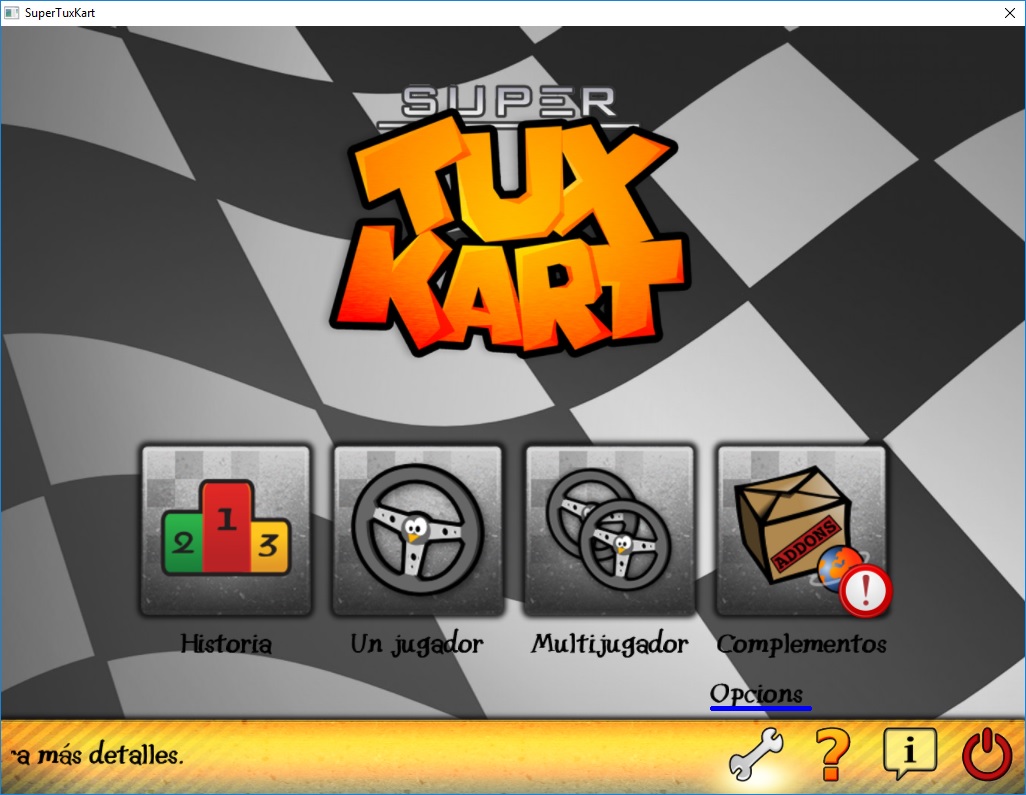
On the left, there is a spelling mistake in “Opcions”, which should read “Opciones”.
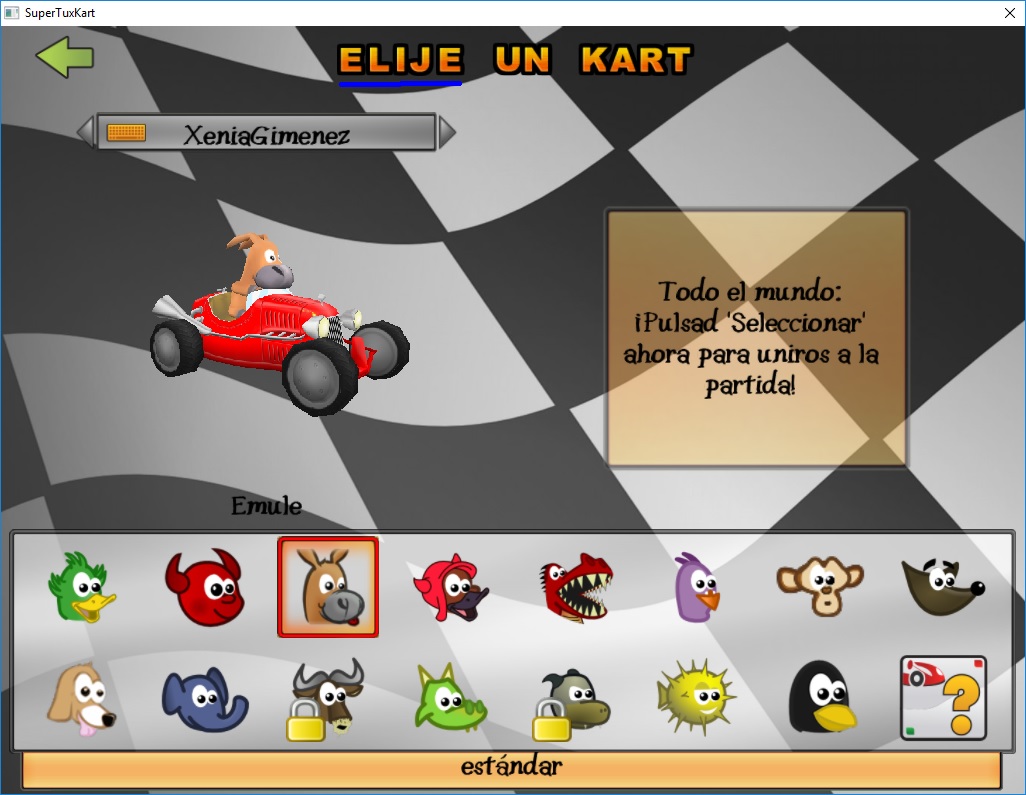
On this screenshot, there is another spelling mistake, because “Elije” should be “Elige”.
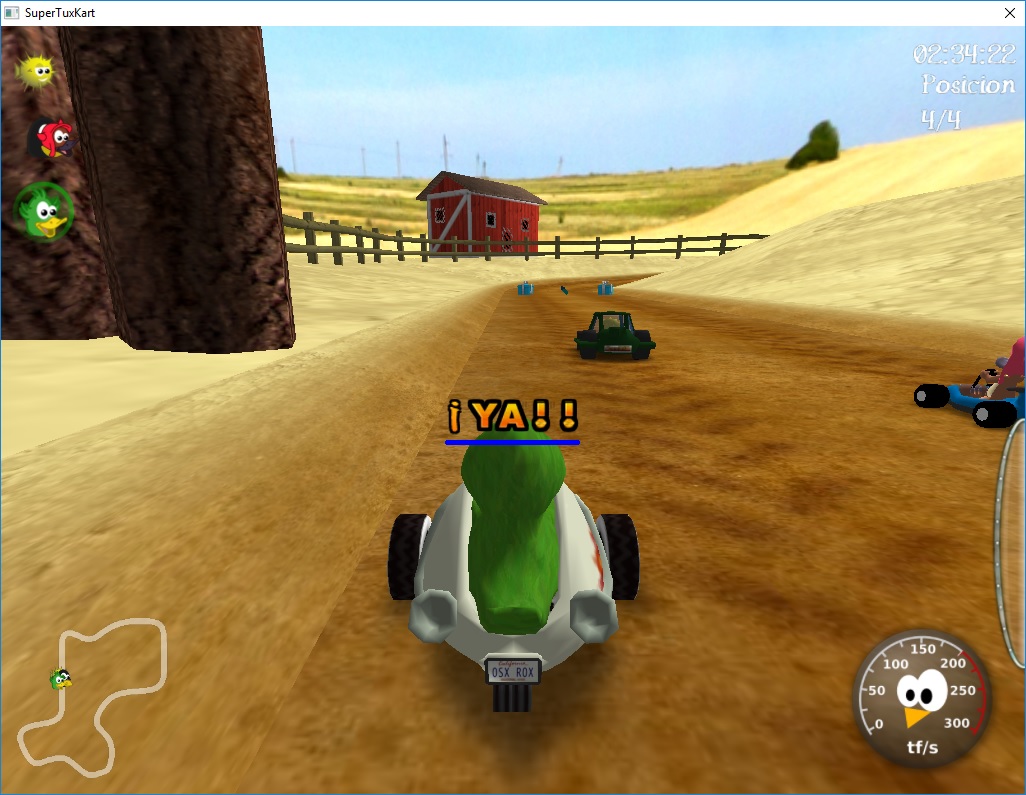
This picture shows another spelling mistake, that is to say, there are two closing exclamation marks and only an opening one.
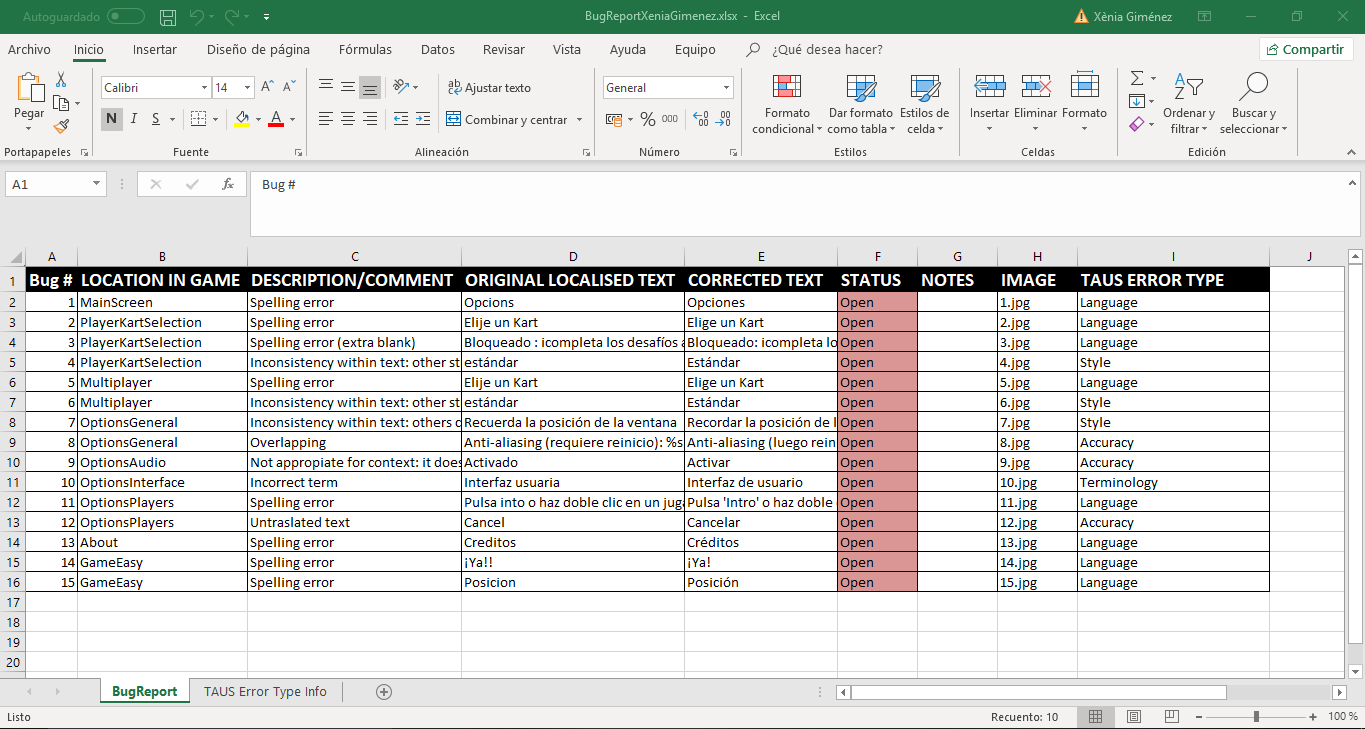
Here you can see the bug report, which contains an identifier, the description of the bug, the original and the corrected text, the status, the corresponding image and the error type.